Build the page as a system.
Visual page editor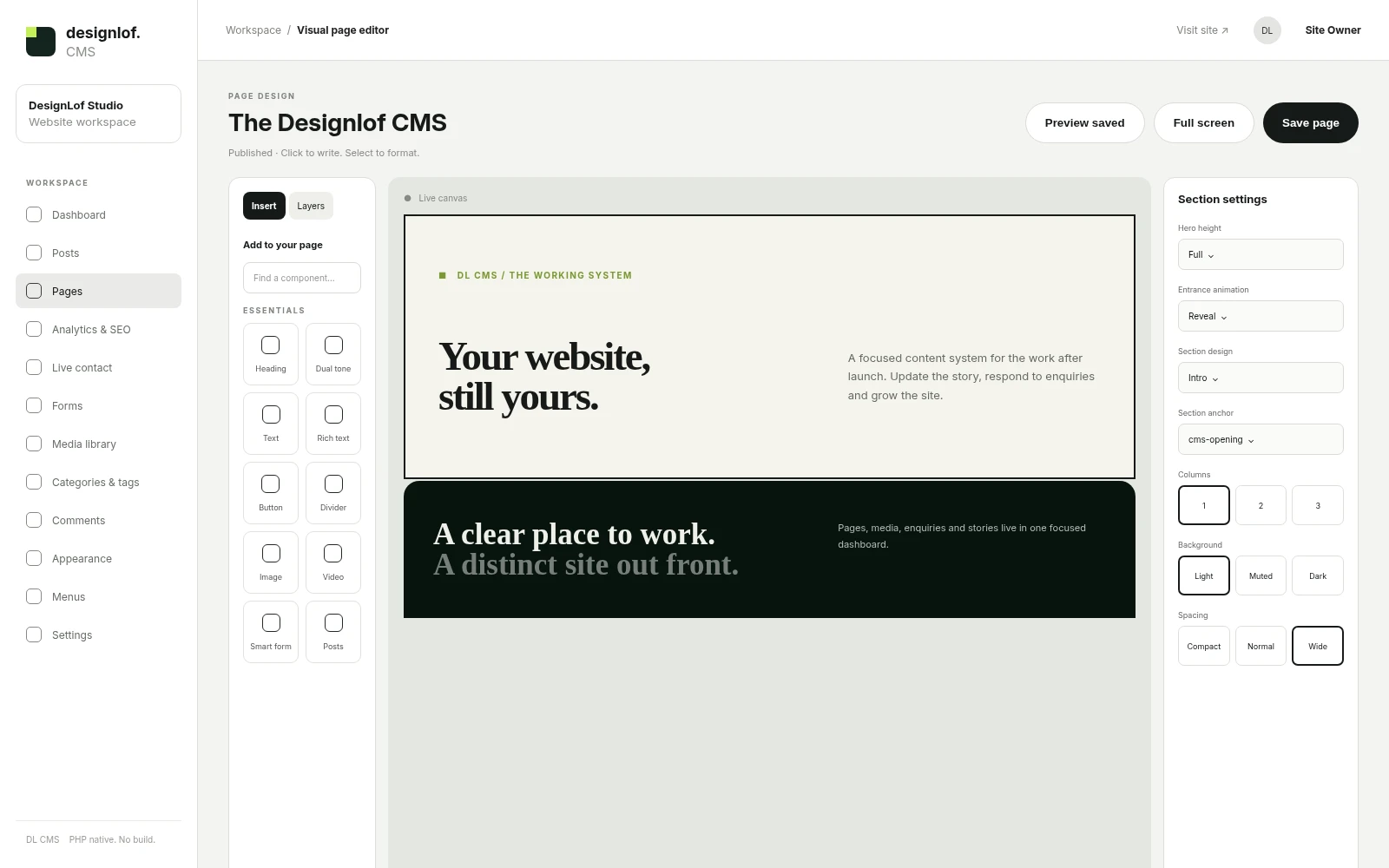 Build the page as a system.Explore the CMS
Responsive sections, content and reusable components stay visible while the experience is assembled.
 designlof.
WEBSITE DEVELOPMENT / FROM DESIGN TO USE
We turn an approved direction into a responsive website, connect the content and practical tools, and make the important journeys work across real screens.
CHOOSE DEVELOPMENT WHEN
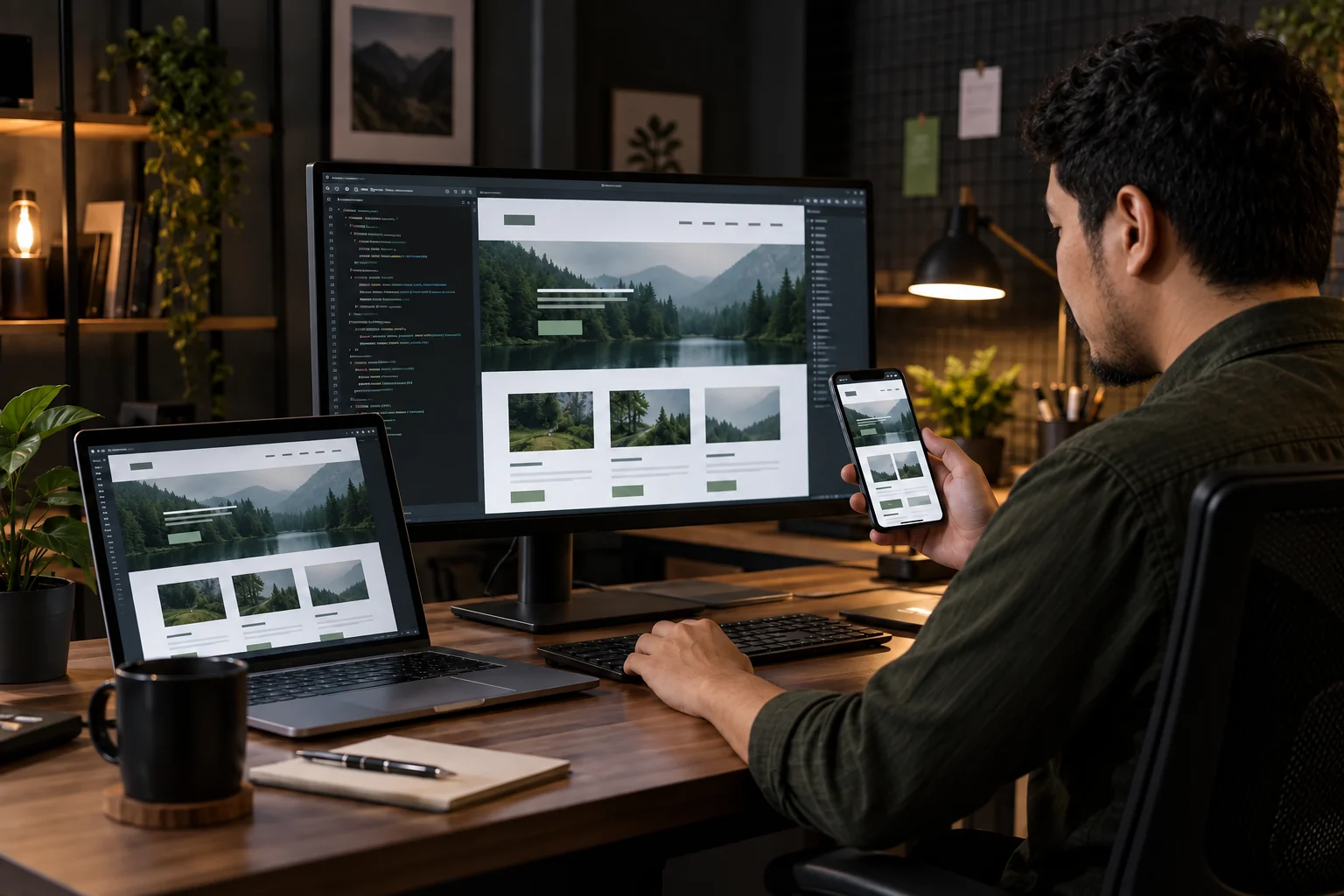
This service fits when the important pages and visual direction already exist, but they still need to work in a browser, adapt to phones and connect to forms or editing tools.
We review the design first and point out any missing decisions before confirming the build.
WHAT YOU RECEIVE
The agreed pages are built, checked across the target screens and connected to the forms, media and private editing dashboard included in the scope.
You also receive a clear handover of what can be edited, how publishing works and which ongoing responsibilities remain.
THE BUILDING BLOCKS / EIGHT CAPABILITIES
Every project uses the capabilities its brief requires. The proposal identifies the pages, components, integrations and environments included in the actual delivery.
Build layouts and controls that adapt to real content on phones, tablets and larger screens.
Turn repeated patterns into shared page parts so future updates remain consistent.
Give every field a clear purpose, show useful errors and confirm when an enquiry has been received.
Configure the private dashboard for pages, images, stories, revisions and the sections your team is allowed to change.
Check headings, labels, contrast, focus, keyboard paths and motion preferences on the agreed pages.
Provide page titles, descriptions, share details, clean links and sitemaps so search engines can understand the site.
Prepare images and code to reduce avoidable waiting and prevent the layout from jumping while it loads.
Use private administration, checked inputs and defined access while recording who handles hosting and maintenance.
THE WORKING SYSTEM / THREE EVERYDAY VIEWS
Development includes the experience after launch. These sanitized previews show how the visual page, publishing overview and media workflow can remain understandable to the people running the site.
Build the page as a system.Explore the CMS Responsive sections, content and reusable components stay visible while the experience is assembled.
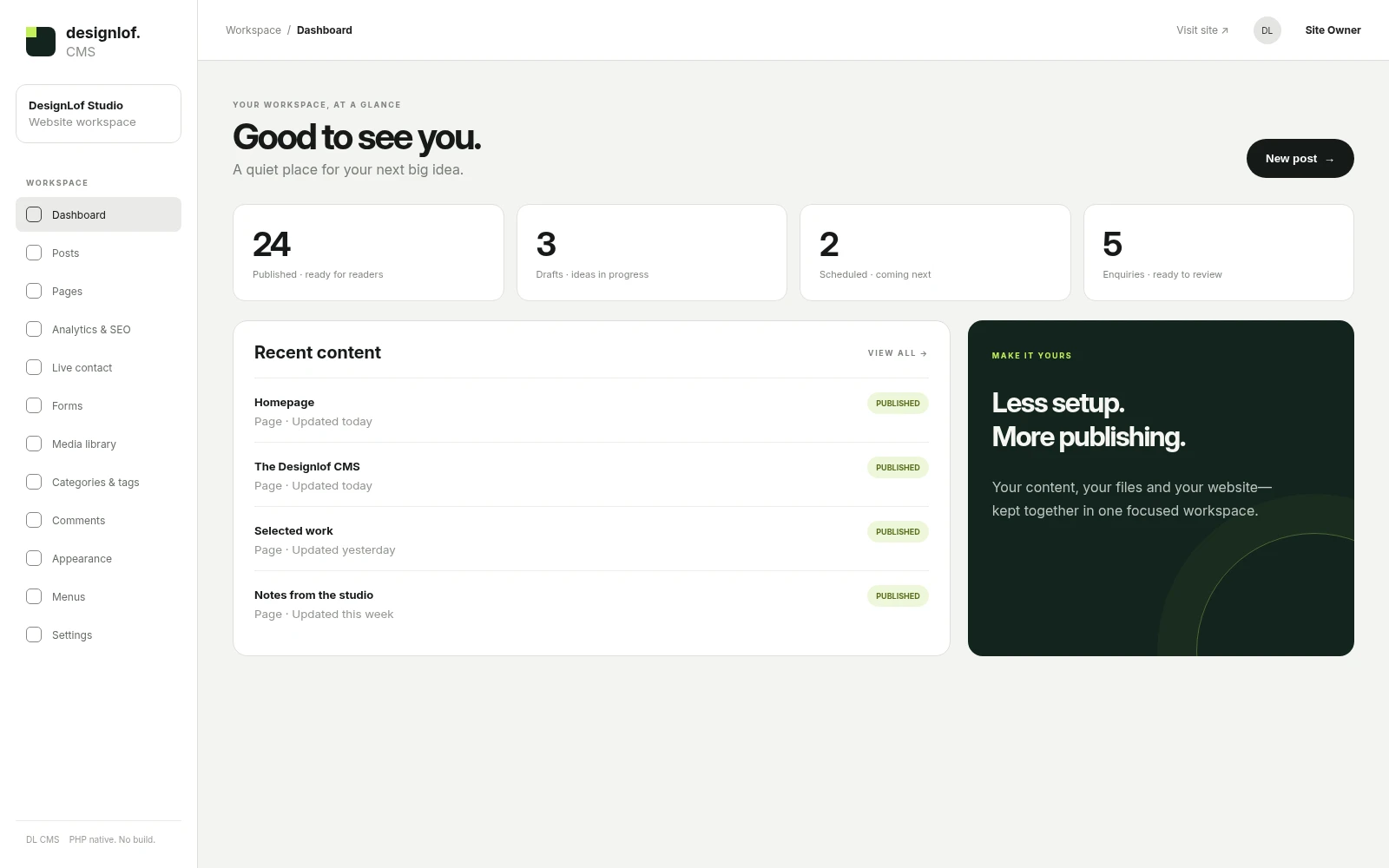 Connect everyday publishing.Explore the CMS
Pages, stories, enquiries and publishing status live in a focused working environment after launch.
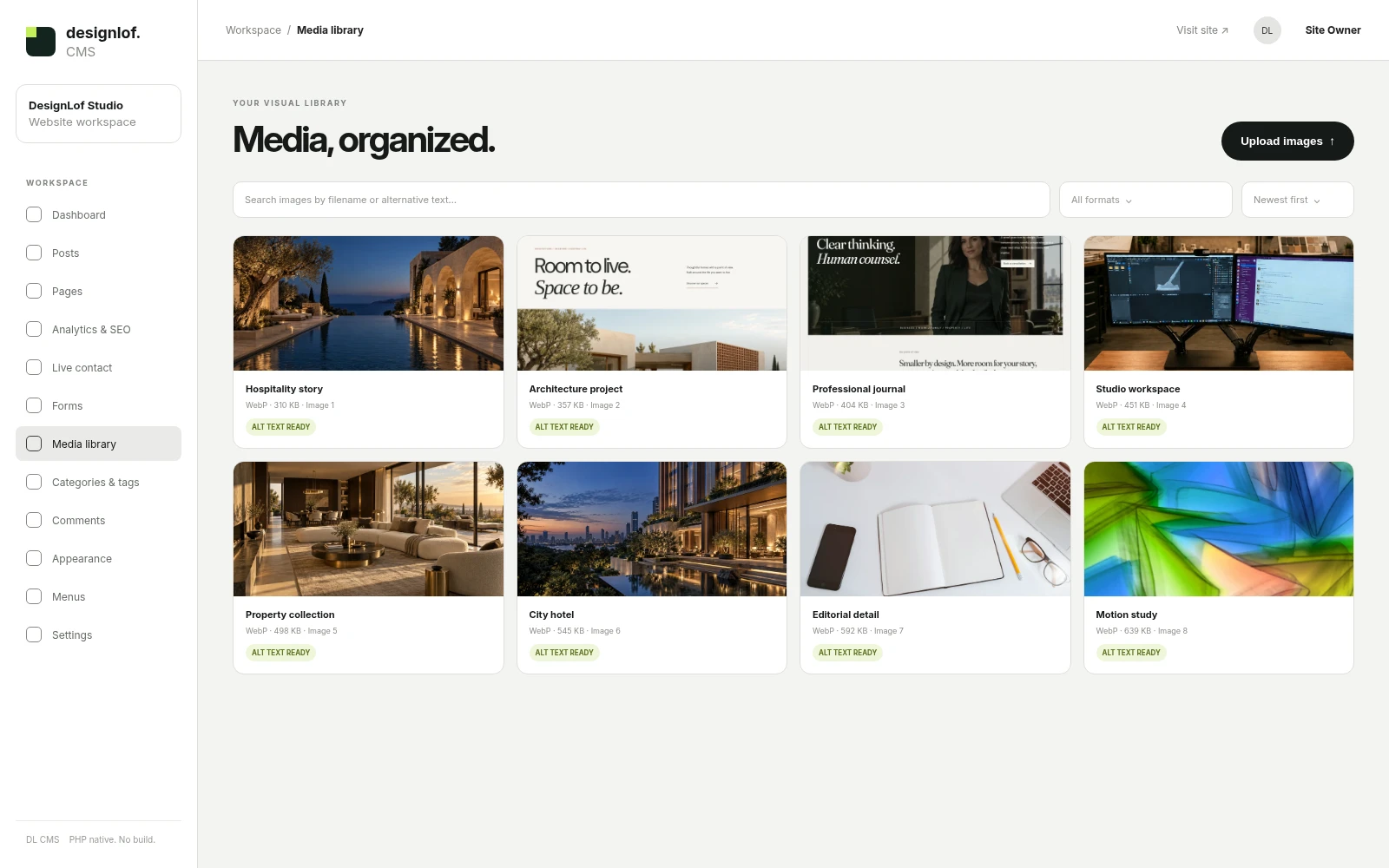 Give content a dependable home.Explore the CMS
Approved assets, alternative text and reusable media records support clearer ongoing publishing.
FROM APPROVED DIRECTION TO RELEASE / 05 STEPS
01 / REVIEW
Confirm page designs, responsive intent, content, component states, integrations, CMS roles and the target launch environment.
02 / MODEL
Map reusable components, editable content, data relationships and boundaries before individual pages create unnecessary exceptions.
03 / BUILD
Develop the responsive interface, CMS structure, forms and agreed integrations while preserving the hierarchy and interaction intent.
04 / VERIFY
Review supported browsers and screens, keyboard paths, forms, content states, motion preferences and the delivery checklist.
05 / RELEASE
Publish through the agreed environment, walk through the CMS and record known limitations, responsibilities and useful next work.
QUALITY IS A SET OF CHECKS, NOT A LAST-MINUTE POLISH
The exact checklist follows the scope and target environment. We prioritize the journeys that affect understanding, publishing and contact instead of treating QA as a single final glance.
Navigation, grids, media and readable line lengths across the agreed viewport range.
Labels, required fields, errors, success feedback and fallback submission paths.
Reachable controls, visible focus and useful disclosure behavior on important journeys.
Prepared media, sensible motion and checks for avoidable shifts or heavy page work.
Headings, links, alternative text, page titles, descriptions and share details where supplied.
Roles, validation, draft or revision behavior and protected administration in the delivered CMS.
THE DEVELOPMENT SCOPE
The written scope identifies page types, components, CMS features, integrations, target environments, review rounds and launch responsibilities.
That clarity gives technical decisions a visible reason and keeps additional requests from becoming hidden work.
EXTERNAL SYSTEMS & ONGOING OPERATIONS
Hosting, domains, email delivery, analytics, payment services, external APIs and third-party subscriptions have their own access, policies, costs and availability. We record which party provides and maintains each dependency.
Monitoring, emergency response, future updates and ongoing content work are included only when separately agreed.
01 / DESIGN-TO-BUILD
A focused route when the page designs, content direction and interaction intent are ready enough to estimate.
We review the files, resolve missing development states and build the agreed responsive website and CMS.
02 / CMS & FEATURE DEVELOPMENT
A route for agreed page components, content workflows, forms, live contact or reviewed integrations within the Designlof foundation.
We inspect the current system first and separate stabilization work from new capability when needed.
BRING THE REAL REQUIREMENTS
Share the current website or design, required pages, important visitor journeys, content ownership, integrations, target launch environment and the people who will publish after launch.
The enquiry starts a technical conversation. We review fit and confirm scope, timing and price before development begins.
BEFORE THE BUILD
These answers explain the relationship between design, development, CMS, external services and ongoing operation. The written proposal and technical notes remain the source of truth for a specific project.
 WhatsApp
Hello! Send us a message and we will reply here.